
What should a shop prepare before requesting a fiber laser quote?
Prepare the material type, thickness range, sheet size, tube profile if applicable, part drawings, expected production volume, preferred automation level, installation location, and target startup date. These details help the supplier recommend a machine family, working area, laser power, loading method, and support plan with fewer assumptions.
A quote request that only says "we need a fiber laser" usually leads to a broad estimate. A quote request with drawings, thickness, material mix, and workflow goals can support a more accurate machine recommendation.
Define the production workflow first
Start by separating the work into sheet cutting, tube cutting, combo sheet-and-tube work, bevel cutting, cleaning, welding, or specialty applications. Each workflow affects machine structure, loading direction, floor space, assist gas planning, and operator training.
For sheet cutting, list the normal sheet size, maximum plate size, material thickness range, and expected nesting workflow. For tube cutting, list tube diameter, profile shape, wall thickness, length, batch size, and whether automatic loading or bevel cutting is required.
Confirm site space and delivery access
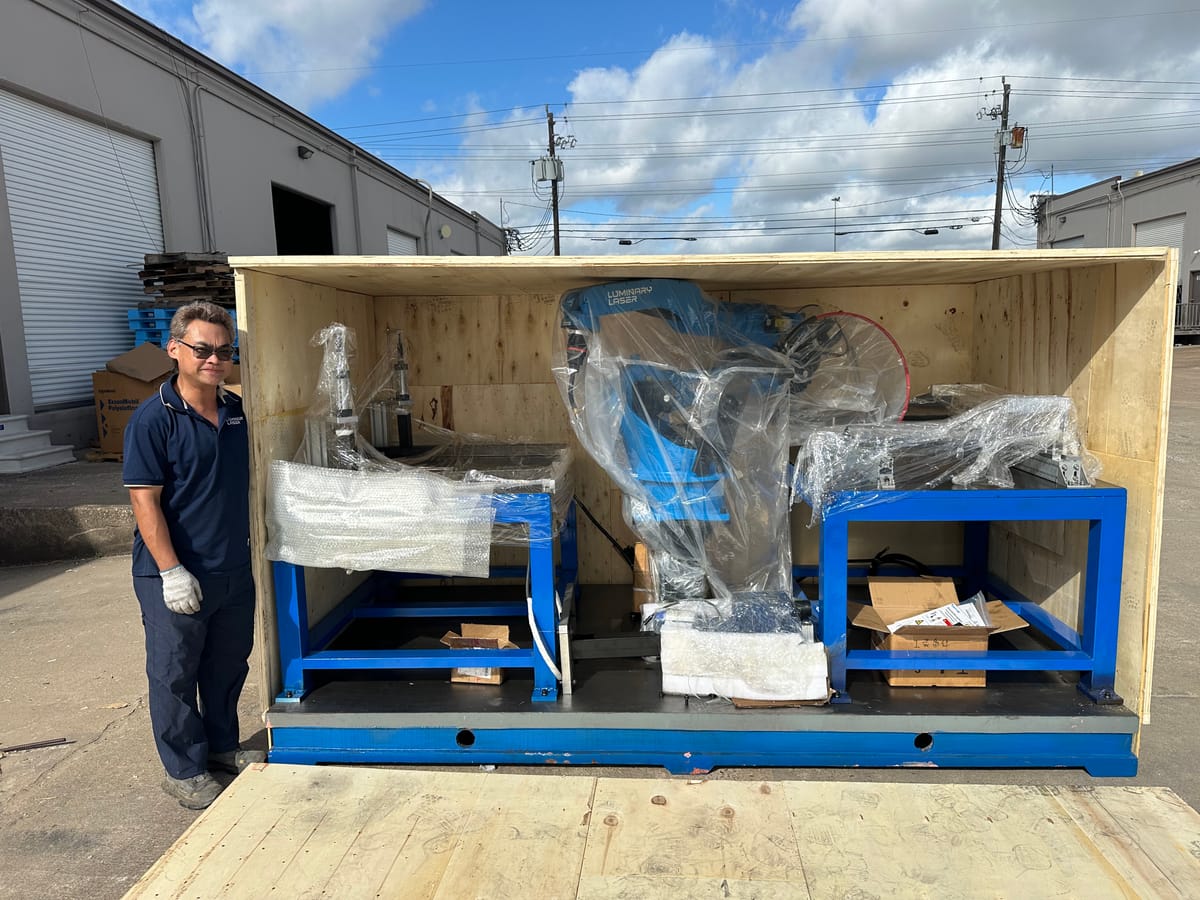
Before installation, confirm machine footprint, door height, door width, unloading area, forklift or rigging access, floor condition, maintenance clearance, operator walkways, raw material flow, finished part flow, and scrap removal. These physical details can affect both machine choice and delivery planning.
Do not measure only the main machine body. Include chiller placement, dust collection, gas storage or gas routing, tube loading length, safety clearance, control cabinet access, and room for operators to work safely around the system.
Review power, gas, air, and ventilation
Have a qualified electrician review voltage, phase, panel capacity, grounding, disconnect location, and local code requirements before the machine ships. Utility readiness is one of the most common reasons a laser installation is delayed.
Assist gas planning should include nitrogen, oxygen, or compressed air availability, pressure requirements, line routing, regulator selection, storage method, and expected consumption. Ventilation and dust collection should be reviewed based on material type, coating, cutting volume, and workplace safety requirements.
Plan operator training before the machine arrives
Training should cover startup and shutdown, loading material, selecting parameters, nesting or file preparation, cutting quality checks, daily maintenance, lens and nozzle care, alarms, basic troubleshooting, and safety procedures.
Choose the operators, maintenance staff, and production decision makers before the training date. Bring representative drawings and real material samples so the first training session is connected to the shop's actual work instead of generic demonstration cuts.
Ask service questions during the buying stage
A machine purchase should include a clear support conversation. Ask how installation coordination works, what information is needed for remote diagnostics, how replacement parts are planned, how service communication is handled, and what the recommended maintenance rhythm looks like after startup.
For buyers across most U.S. regions, LUMINARY LASER coordinates quote review, installation readiness, operator training, remote support discussion, and parts planning through its Houston office.
Why public pricing is not enough for industrial laser equipment
Industrial laser machine pricing depends on working area, laser source power, automation, loading system, dust collection, chiller, software needs, shipping route, installation requirements, and service scope. Two machines with similar names can have very different production value if the configuration is different.
For a quote-only industrial site, the better goal is not to publish a generic price. The better goal is to collect enough production information to recommend the right configuration and discuss a realistic budget range with the buyer.
A simple quote-readiness checklist
Before contacting a supplier, prepare: material type, thickness range, sheet or tube dimensions, sample drawings, production volume, automation preference, installation city and state, available utilities, expected startup timeline, operator training needs, and any required downstream process such as welding, bending, drilling, or assembly.
This checklist helps both sides move faster. The buyer gets a clearer recommendation, and the supplier can avoid quoting a machine that does not match the shop's floor space, workflow, or production target.
FAQs
Frequently asked questions.
What information is needed for a fiber laser quote?
Provide material grades, thickness range, sheet or tube dimensions, representative drawings, expected volume, working area, automation needs, installation location, utilities, and target startup timing.
Why are industrial fiber laser prices configuration-specific?
The final configuration can change with working area, laser power, loading and unloading automation, chiller, dust collection, software, shipping, installation, training, and service scope. A useful quote therefore needs production and site details.
Should site utilities be reviewed before requesting a quote?
Yes. Electrical service, grounding, assist gas, compressed air, ventilation, dust collection, delivery access, and maintenance clearance can affect configuration and installation planning.
What drawings should be sent with a fiber laser quote request?
Send a representative mix of common and demanding parts, with material, thickness, tolerances, edge requirements, quantities, and any downstream bending, welding, or assembly operations identified.
Join the conversation
Reader discussion
Share a question or your experience with this topic. Comments appear immediately after submission. For a machine quotation, contact our team directly.
Loading reader comments…
Leave a comment