
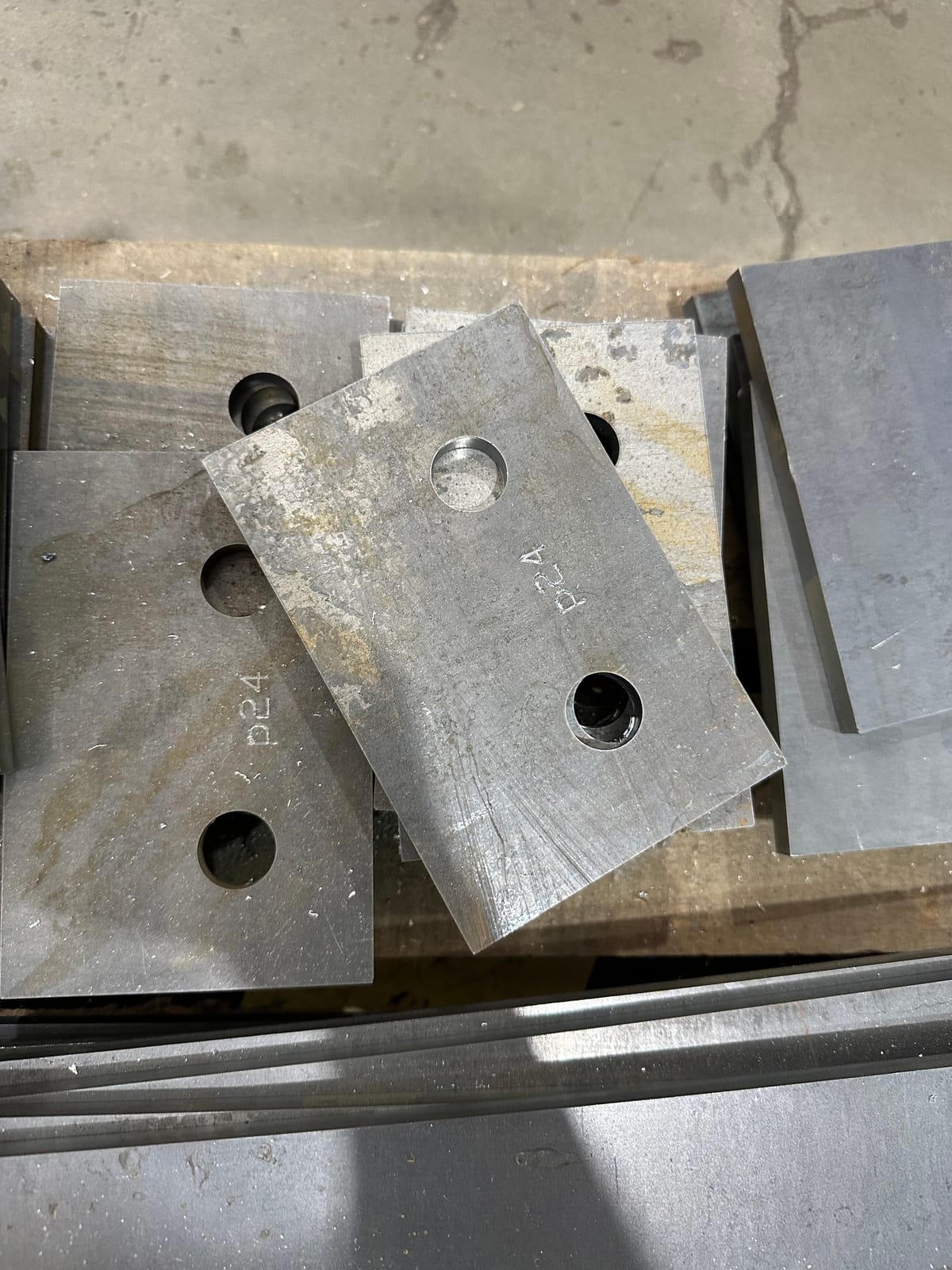
Match the assist gas to the finished-part requirement
Start with what the edge must do next. Ask whether the part will be painted, powder coated, welded, bent, assembled, or shipped with a visible edge. Record the material grade and thickness in gauge or inches and millimeters, along with the required finish and any customer drawing notes.
Nitrogen is commonly considered when an oxide-free edge is important for the selected material and process. Oxygen is often evaluated for carbon-steel work where the process and edge condition are acceptable to the next operation. Compressed air may be considered where the validated cut quality and air-treatment requirements fit the job.
Do not separate gas choice from supply planning
The decision also includes storage method, delivery pressure, line capacity, regulator selection, purity or air-treatment requirement, and how supply interruptions are handled. Clean, dry, oil-controlled compressed air requires the appropriate preparation for the machine and the process; the required setup should be confirmed with the equipment documentation and air-treatment provider.
Avoid copying gas settings from an online chart. Pressure, flow, nozzle, focus, material surface, thickness, and machine configuration all affect the result. Validate parameters on representative material before treating a gas option as a production standard.
Compare post-processing and total workflow
An assist gas that appears less expensive at the point of cutting can add time later if the resulting edge requires cleaning, preparation, or additional inspection. Conversely, a gas option with a higher delivered rate may be appropriate where it supports the edge requirement of the finished part. The correct comparison follows the part through its next operation.
For an internal operating-cost model, record local gas rates and actual consumption separately from electricity, consumables, labor, and maintenance. Do not present a universal hourly cost or a universal gas-saving claim without those shop-specific inputs.
What to bring to a gas and cutting discussion
Provide the material, thickness, sheet size, part geometry, desired edge condition, next operation, annual or monthly volume, existing gas source, and any existing compressed-air treatment. Include photos of current cut quality where possible.
Pending input: site gas availability, supplier delivery terms, air quality, local safety requirements, and the validated cutting parameters for the specific machine. These must be confirmed before setting a production standard.
FAQs
Frequently asked questions.
Which assist gas is used when an oxide-free edge is needed?
Nitrogen is commonly evaluated where the selected material and downstream process require an oxide-free edge, but the final choice must be validated with the material, thickness, machine, and required finish.
Can compressed air replace nitrogen for fiber laser cutting?
It may be evaluated for certain jobs, but the decision depends on cut quality, air treatment, material, thickness, downstream work, and validated machine parameters.
Is oxygen always the best choice for carbon steel?
No. Carbon-steel work should be evaluated against the required edge condition, thickness, post-processing, gas supply, and the selected cutting parameters.
What must be confirmed before changing assist gas?
Confirm material and thickness, edge requirement, gas supply and air quality, safety requirements, equipment documentation, and representative sample-cut results.
Join the conversation
Reader discussion
Share a question or your experience with this topic. Comments appear immediately after submission. For a machine quotation, contact our team directly.
Loading reader comments…
Leave a comment